
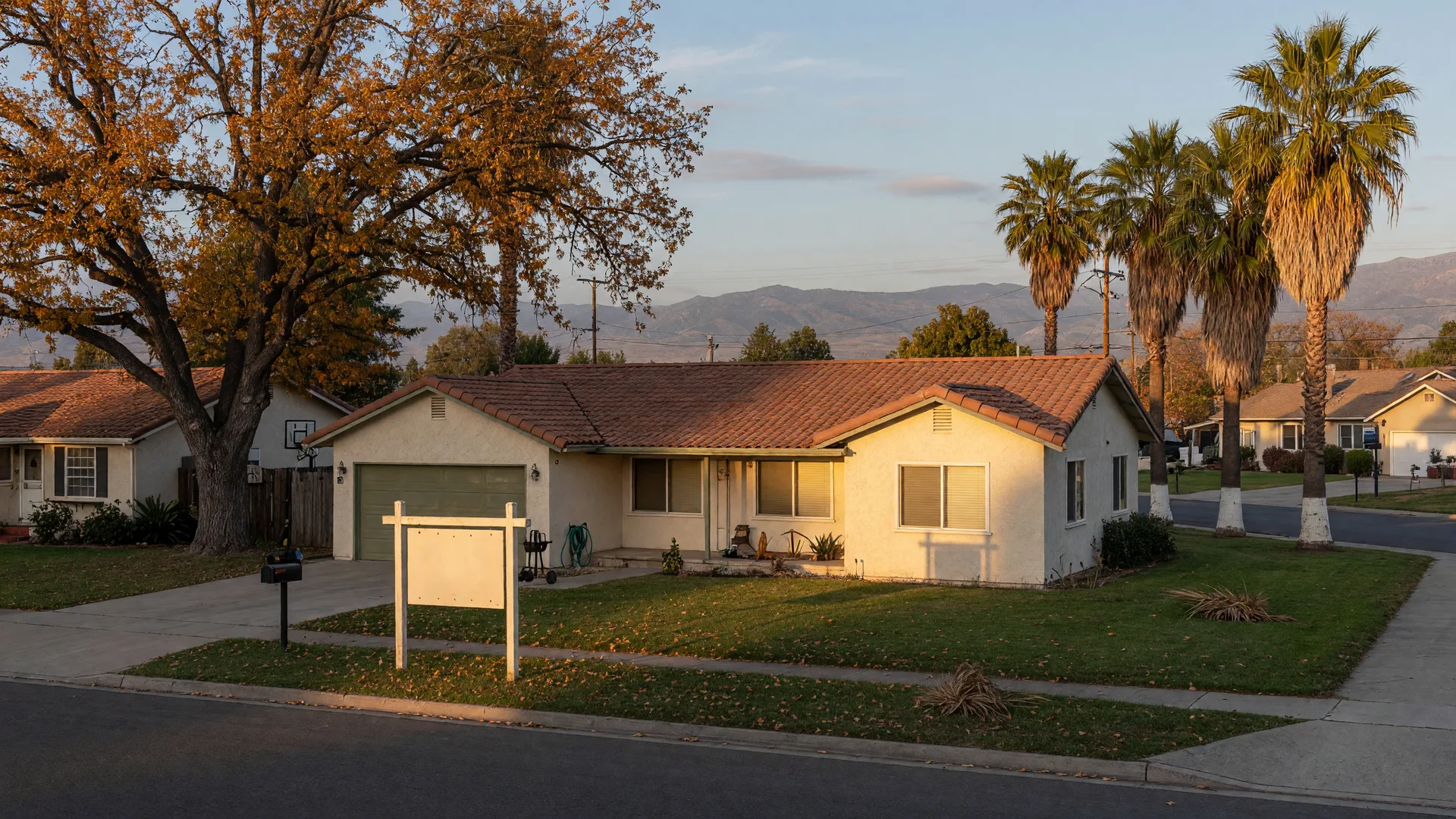
Published · Escrow timeline data from ICE Mortgage Technology and Redfin (2025 to 2026); Merced County market context from C.A.R. and Redfin, with every figure dated and cited below
What happens after you accept an offer on a Merced County home? The sale moves into escrow, and a typical California financed escrow runs 30 to 45 days from the signed contract to the recorded deed. During that window your disclosures go to the buyer, the inspection and appraisal happen, the buyer's loan clears, and title is searched and insured, then you sign, the county records the transfer, and the buyer gets the keys. This guide walks you through every step so nothing surprises you between the offer and the close.
What happens after you accept an offer in Merced County?
Accepting the offer is a milestone, not a finish line. The purchase agreement you sign is a contract with a built-in calendar: dates for inspections, the appraisal, the loan contingency, title review, and closing, all measured in days from acceptance. Both sides are now bound to perform, and that is why escrow is where a seller's agent earns the fee, tracking dates, prepping the house for inspections, assembling documentation, and negotiating every extension or credit on your behalf.
The process is led by an escrow officer, a neutral third party who holds the buyer's earnest money deposit, collects documents and funds, coordinates signatures, and pays everyone at the end. In Merced County that officer works under the purchase agreement's deadlines, whether your home sits near downtown Merced, in a newer subdivision near UC Merced, or on acreage in McSwain. The mechanics are the same; only the comparables, the inspections, and the level of lender scrutiny change by neighborhood.
The seller's escrow timeline, step by step
Step 1: You sign the purchase agreement and escrow opens
Once you and the buyer agree on price and terms, the signed purchase agreement goes to the escrow company and the buyer deposits earnest money, the good-faith deposit that shows the buyer is serious. In California the standard Residential Purchase Agreement is used across the state, so the forms, contingencies, and deadlines in a Merced sale are the same ones used in Modesto or Fresno. Escrow opens with three parties in the mix: you, the buyer, and the escrow officer, with your agent and the buyer's agent managing the flow of documents.
This is also when the title company begins work. A title search digs into the public record for liens, easements, unpaid assessments, and any gap in the ownership chain, because the buyer's lender will not fund a loan until title is clean and insured. Deferred maintenance and neglected paperwork tend to surface here, which is one reason I ask sellers to gather HOA documents, permits, and mortgage payoff information before we list. If your sale involves an HOA, such as a condo or townhome in Turlock or Atwater, those documents are part of this same opening stage.
Step 2: Seller disclosures go to the buyer
California law requires sellers to complete the Transfer Disclosure Statement and a set of other disclosures covering known defects, natural hazards, permits, and more. Many of these documents should already be in your listing packet, because the disclosure duty starts before the offer. In the escrow period the buyer reviews them and can ask follow-up questions, and in some cases the buyer backs out within the disclosure review window if material issues surface. My guide to Merced County seller disclosures covers the full list, and I review every packet with sellers before it ships.
Step 3: The buyer's inspection and repair requests
Within the inspection contingency window, typically 7 to 17 days, the buyer schedules a general home inspection and often add-on inspections for pests, roofs, pools, septic systems, wells, or solar equipment. The report comes back with findings, and the buyer then submits a request for repairs, seller credits, or a price reduction. The seller's response is the next negotiation of the sale: you can fix, credit, decline, or counter, and the reply has its own deadline.
Foothill properties bring their own inspection layers. A home on a private well or septic system in Catheys Valley, Mariposa, or the farm towns along Highway 99 may need water tests and septic certifications that valley tract homes never see. My guide to handling repair requests after the home inspection walks through the response playbook, and the home inspection guide for Merced County sellers covers what inspectors check.

Step 4: The appraisal
After the inspection window, the buyer's lender orders the appraisal, an independent valuation that confirms the home is worth the loan amount. The appraiser compares your home to recent closed sales in your neighborhood, adjusts for condition, size, and features, and the lender underwrites against that number. If the appraisal comes in at or above the contract price, the loan proceeds normally; if it comes in low, the parties renegotiate, the buyer bridges the gap, or the deal can terminate. The pricing discipline from your listing carries straight into escrow, and my home appraisal guide for Merced County sellers covers the odds, preparation, and response playbook in detail.
Step 5: Loan approval and the contingency calendar
While the appraisal is in flight, the buyer's financing contingency runs on its own clock. The lender collects income, asset, and credit documentation, orders the appraisal, and issues the clear-to-close that unlocks final funding. If the buyer cannot obtain a loan commitment by the deadline, the buyer can cancel and recover the earnest money, which is why buyers race the calendar. National data from ICE Mortgage Technology's May 2026 Mortgage Monitor shows the average purchase loan closed in 36.8 days as of March 2026, the fastest average since the firm began tracking, down from 37.3 days a year earlier. Redfin's close-on-a-house explainer frames the same window for buyers: most financed purchases close within 30 to 60 days of an accepted offer, cash sales often within 7 to 14 days, and government loans at the longer end.
Contingency deadlines can be extended by mutual agreement, and extensions are common, but every extension is a negotiation. My guide to multiple offers in Merced County explains the contingencies buyers waive or shorten to make an offer competitive, and that choice at the offer stage shapes how smooth the escrow period runs.
Step 6: Title search, escrow instructions, and signing
As the contingencies clear, the title company produces the preliminary title report and, at closing, the title insurance policy. The escrow officer prepares the settlement statement, an accounting of every dollar in the sale: the price, the payoff of your existing mortgage, prorated property taxes and HOA dues, title and escrow fees, transfer taxes, commissions, and any credits negotiated for repairs or closing costs. You review the settlement statement before signing, and I walk sellers through the numbers line by line so the final wire amount is never a surprise. My complete guide to selling costs in Merced County itemizes the typical deductions ahead of time.
Step 7: Recording and the day you hand over the keys
On closing day you sign the grant deed and the remaining closing documents, the buyer funds the purchase, and the escrow officer records the deed with the Merced County Recorder. Recording is the legal moment ownership transfers, and once the recording time-stamps, the loan funds, the proceeds disburse to you, and the buyer receives the keys. In a typical Merced County sale the seller pays the documentary transfer tax and the escrow and title fees unless the contract says otherwise, and property taxes are prorated so you only pay through your ownership period. After the close you may receive a supplemental property tax bill from the county for your portion of the reassessment period, a normal post-sale letter that surprises many sellers. Your net proceeds arrive by wire or cashier's check, usually on the day of recording or the business day after.

How long does escrow take in Merced County?
Escrow length is written into the purchase agreement, so it is negotiable at the offer stage. In California, a financed sale commonly runs 30 to 45 days from acceptance to recording, cash sales often close in two to three weeks, and government-backed loans tend toward the longer end of 45 to 60 days. The national averages cited above land in the same range, and Merced County buyers commonly write 30- or 45-day escrows. Sellers weighing multiple offers should compare the proposed closing date alongside price and contingencies, because a faster close may be worth less than a cleaner one.
The county's market context keeps this timeline realistic. The California Association of REALTORS' August 2026 report put the Merced County median for existing single-family homes at $439,740, up 5.1 percent from July and 7.3 percent year over year, with about 2.8 months of supply, still a seller's market. Redfin's Merced County market page adds the pace: a median sale price near $421,000 for the three months ending August 2026 and roughly 35 median days on market, meaning priced-right homes convert from listing to contract quickly and then run a standard escrow. For the whole journey from list to close, my guide to selling timelines in Merced County breaks it down by neighborhood and price point.
What can delay or break a sale after the offer?
Four issues cause most post-offer trouble in Merced County. An appraisal that lands below the contract price forces a renegotiation or a bridge. Significant inspection findings trigger repair requests and counter-requests that can stall if the parties dig in. Buyer financing can extend past the loan contingency deadline or fall through entirely. And title problems such as an undisclosed lien, an easement the buyer's lender rejects, or an ownership gap must be cleared before funding. The difference between a clean close and a messy one is usually preparation before the offer: accurate disclosures, documented upgrades, verified square footage, and a price the appraiser can support. That is the work I do with sellers from the first conversation, not the first problem.
Why the agent behind the offer still matters
The offer is the handoff, and escrow is where sellers see whether their agent can operate. I keep a checklist of every deadline in the contract, prep the house for inspections, brief sellers before appraisers arrive, assemble comparable sales for appraisal reviews, negotiate repair requests with the buyer's agent, and review the settlement statement line by line before you sign. When buyers waive contingencies in a competitive market, I make sure the waivers are understood and documented, and when the calendar slips, I negotiate extensions that protect your position. That is the polished, confident representation behind The Seller's Agent approach, and it is why who you choose to carry you through escrow matters as much as who priced your home.
Sources
Escrow timeline figures come from ICE Mortgage Technology's May 2026 Mortgage Monitor (average purchase loan closed in 36.8 days as of March 2026) and Redfin's explainer on closing timelines (most financed purchases close in 30 to 60 days; cash in 7 to 14 days). California escrow conventions of 30 to 45 days for financed sales reflect standard practice under the C.A.R. Residential Purchase Agreement. Merced County price, supply, and pace data come from the California Association of REALTORS' August 2026 sales report and Redfin's Merced County housing market page.
Frequently Asked Questions About Life After the Offer in Merced County
What happens after you accept an offer on your house in Merced County?
Once you accept an offer, the sale enters escrow and the purchase agreement's calendar starts. The buyer's earnest money deposits with an escrow company, seller disclosures go to the buyer, the buyer's home inspection takes place and repair requests are negotiated, the lender orders the appraisal, and title is searched and insured. When the loan clears and all contingencies are removed or waived, you sign the deed and closing documents, the escrow officer records the transfer with the Merced County Recorder, and the buyer receives the keys. A typical financed escrow in California runs 30 to 45 days, with faster timelines for cash sales.
How long does escrow take after an offer is accepted in California?
A typical California escrow for a financed sale runs 30 to 45 days from the accepted offer to the recorded close, and cash sales can close faster, often in two to three weeks. National data supports the same window: ICE Mortgage Technology reported that the average purchase loan closed in 36.8 days as of March 2026, and Redfin notes that most buyers close within 30 to 60 days after an offer is accepted, with cash purchases often closing in 7 to 14 days. Your exact closing date is set in the purchase agreement, so it is negotiable at the offer stage.
Who handles escrow and title in a Merced County home sale?
A licensed escrow company collects the documents, the earnest money deposit, and the buyer's funds, coordinates signatures, and disburses proceeds at closing. A separate title company searches the public record for liens, encumbrances, and ownership gaps, then issues the title insurance policy the buyer's lender requires. In most Merced County sales the buyer chooses the escrow and title companies, but both are negotiable terms in the purchase agreement and must be licensed to do business in California. Your agent reviews their instructions, payoff figures, and settlement statement line by line before you sign.
What does the seller pay at closing in Merced County?
In a typical Merced County sale the seller pays the escrow services and owner's title insurance, the documentary transfer tax charged by the county and, where applicable, the city, the agent commissions written into the listing agreement, and any negotiated buyer credits for repairs or closing costs. Property taxes are prorated to the close of escrow so you only pay through your ownership period, and after the sale you may receive a supplemental tax bill from the county for your portion of the ownership period after reassessment. The full breakdown lives in the settlement statement, which your agent reviews with you before you sign. For a complete rundown of typical costs, read my guide to the cost of selling a home in Merced County.
What can delay or kill a deal after the offer is accepted?
The most common risks in a Merced County sale are the appraisal coming in below the contract price, significant inspection findings that trigger repair negotiations, the buyer's financing falling through or extending past the loan contingency deadline, and title issues such as an undisclosed lien, easement, or ownership gap. Each has a fix: an appraisal can be reviewed with additional comparable sales, repairs can be resolved with credits or negotiated solutions, loan deadlines can be extended by mutual agreement, and title problems can usually be cleared before closing. The sale breaks only when the parties fail to agree within the contract's deadlines, which is why an experienced seller's agent tracks every date and keeps the path to closing clear.

The Seller's Agent. Monica has guided sellers across Merced County through hundreds of escrows, from starter homes in Winton to acreage in McSwain and Catheys Valley. She tracks every contingency deadline and settlement line so the close lands on time and on the seller's side.
The Seller's Agent. Who You Choose Matters.
Whether you are weighing offers now or just beginning the conversation about selling, Monica offers a free, no-obligation consultation to review your home, your timeline, and exactly what each offer would mean between signature and close.