
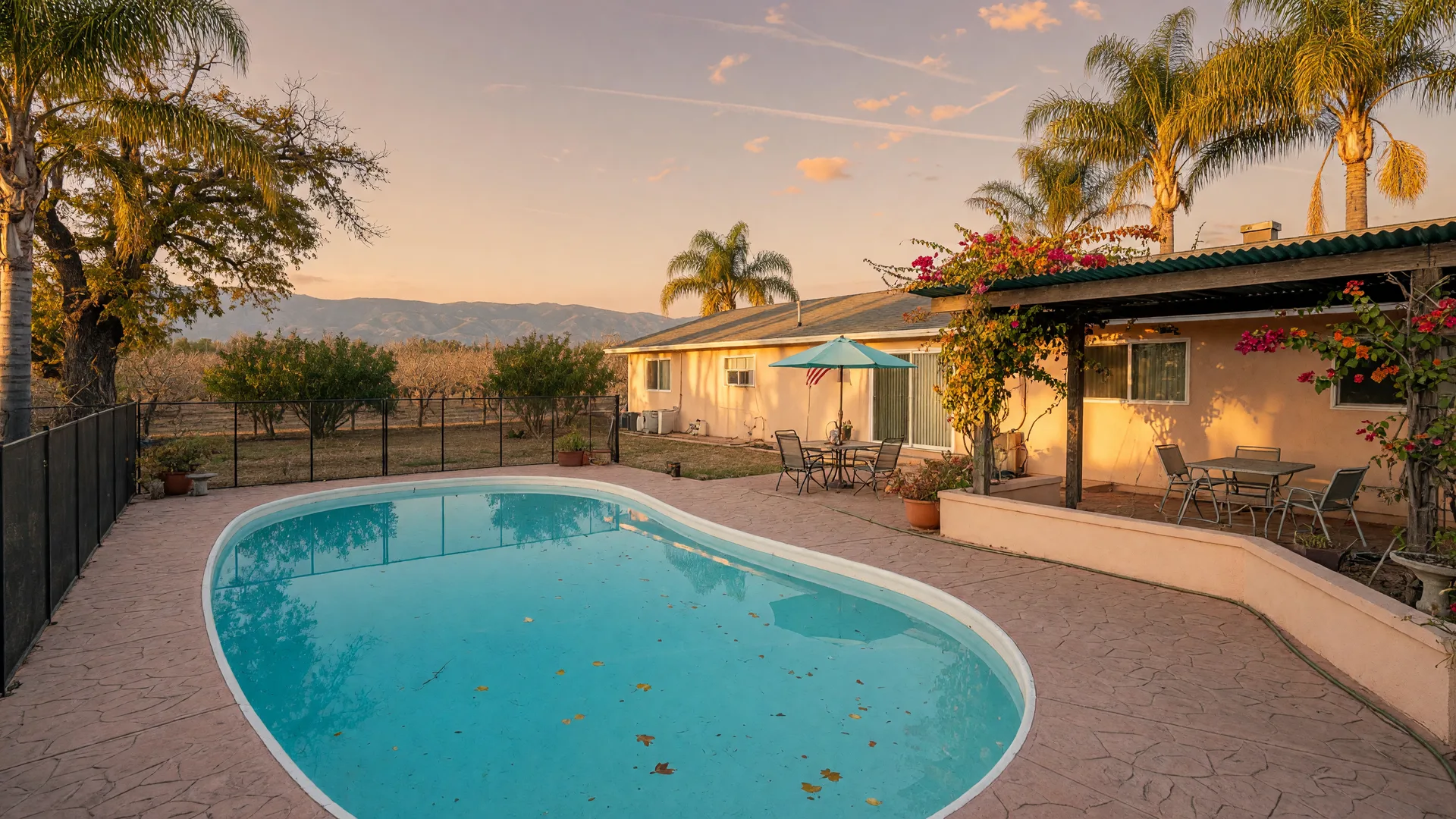
Published · California pool safety and disclosure rules current as of fall 2026
Selling a home with a pool in Merced County comes down to two things: prove the pool is safe, and disclose its condition honestly. A well-maintained in-ground pool is an asset in the Central Valley's long, hot swim season, and buyers here search for it. The sales that stall are the ones where the safety features are undocumented and the condition is glossed over. Here is what Merced County sellers need to know in 2026.
Do swimming pools add value to a home in Merced County?
The short answer is yes, in the Central Valley, when the pool is in-ground and well maintained. Pool value tracks climate: warm markets with long swim seasons consistently show a resale lift, while cooler markets show little or none. In California, Redfin's analysis of pool premiums found a pool adds roughly $95,000 to the value of a typical Los Angeles home. On the cost side, the National Association of REALTORS' 2023 Remodeling Impact Report puts the average installation cost of an inground pool near $90,000 and the average resale recovery at about 56 percent of that amount.
The math works in Merced County because the season is long. Merced's hottest month, July, averages highs near 95 degrees, and the comfortable swim season runs roughly six months, from May through October, even without a heater. A pool is a feature the Valley buyer pool expects and pays for, especially families and buyers relocating from the Bay Area who assume a usable backyard pool comes with Valley living. Condition is what decides the premium: a pool with clear water, working equipment, and a documented repair history reads as an asset, while a green or inoperable pool reads as a project with a price tag attached.
Type matters too. An in-ground gunite or vinyl-liner pool adds value; an above-ground pool typically adds little or none and can shrink the buyer pool, because buyers assume they will eventually remove or replace it. If the home has an above-ground pool, the honest strategy is to treat it as neutral in the price and let the buyer decide what it is worth to them.
What the California Swimming Pool Safety Act requires
The legal backbone of any pool sale in California is the Swimming Pool Safety Act, Health and Safety Code sections 115920 to 115929. The requirements attach to new construction and remodeling permits, not to the act of selling: since January 1, 2018, when the two-feature standard took effect, any new or remodeled residential pool must have at least two of seven listed drowning-prevention safety features. Before that date the standard was one feature.
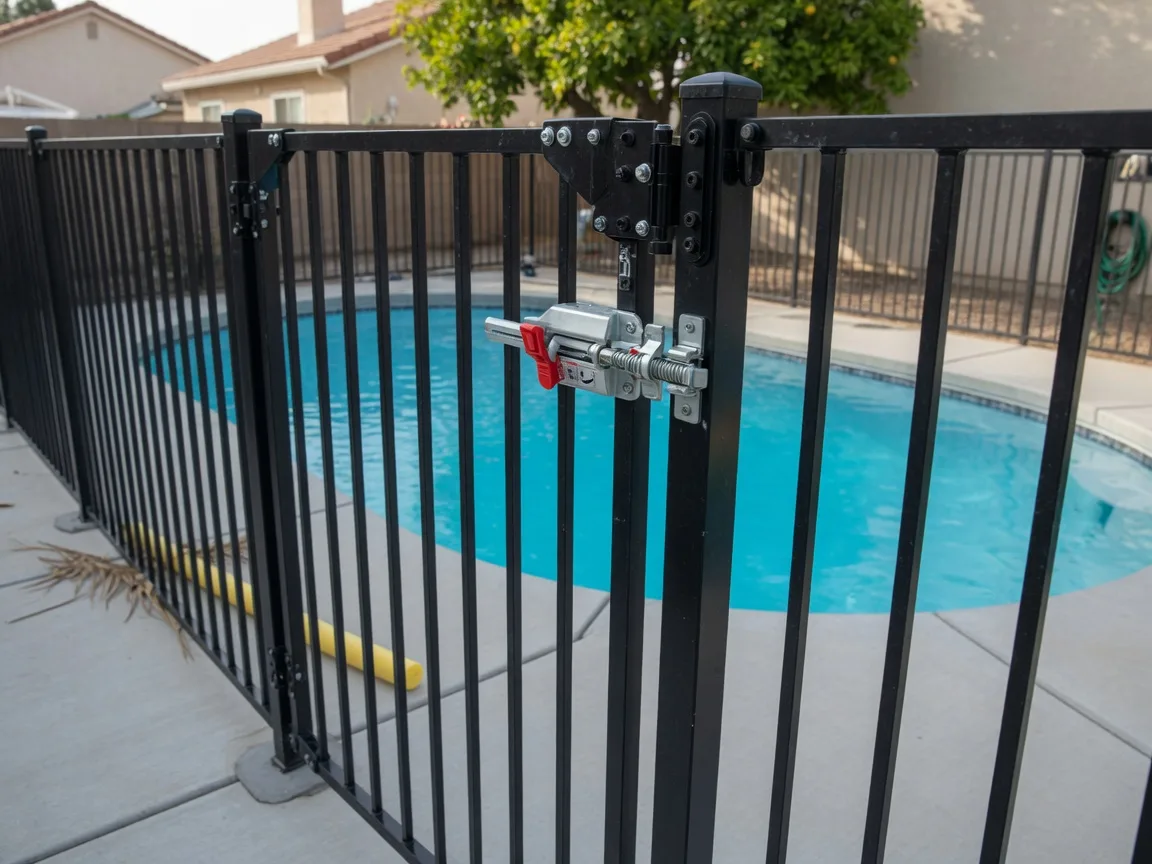
The seven features are the ones that decide a buyer's inspection reaction. They include an isolation fence that isolates the pool from the home, a removable mesh fence meeting ASTM F2286, a safety pool cover meeting ASTM F1346, exit alarms on doors that open directly to the pool area, self-closing and self-latching devices on such doors and windows, and the additional protection devices added by AB 2977, which include anti-entrapment drain covers. The isolation fence has specifics worth knowing before a showing: at least 60 inches high measured on the outside, no more than 2 inches of clearance at the bottom, no openings that pass a 4-inch sphere, and no footholds or handholds a small child could climb. Gates must be self-closing and self-latching.
For a seller, the practical point is this: older pools are grandfathered and do not have to be brought to the current standard just to sell. But a pool that was built or remodeled after the rules took effect, or one that carries a recent building permit, should have its features documented, because the buyer's inspector will look for them line by line.
What the home inspection report must say about your pool
California Business and Professions Code section 7195 adds a rule that surprises many sellers: when residential property with a pool or spa changes hands, the home inspection report must identify which of the seven safety features the pool has and must state specifically if it has fewer than two. This is a disclosure law. The pool does not have to pass, and the seller is not required to order a separate pool inspection, but the inspector's findings drive the buyer's negotiation.
In practice, the buyer's inspector will walk the pool, note the gate, the covers, the alarms, and the drain, and write the findings into the report the buyer reads. A pool that shows two or more features documented, with a functional self-closing gate and a compliant drain cover, is a quiet line item. A pool with an open gate, a missing drain cover, or a door with no alarm becomes a requested repair or a credit. My guide to the Merced County home inspection process explains what inspectors check and what sellers fix first, pool included.
Buyers in Merced County often add a separate pool and spa inspection on top of the general report. That specialist checks the pump, filter, heater, plumbing, and plaster or liner, and runs a leak test. It is a routine and affordable add-on, so expect it. Preparing the equipment to pass is far cheaper than negotiating after a negative report lands.
Pool disclosures in the Merced County sale
The pool belongs on the Transfer Disclosure Statement. California requires sellers of one-to-four-unit residential property to disclose known material defects, and the condition of the pool, spa, and equipment sits squarely inside that obligation. Disclose the age of the pool and its equipment, the condition of the plaster or liner, any history of leaks, cracks, or repairs, and the working status of the heater, pump, and filter. A disclosed issue is a negotiation point that can be priced into the deal. A hidden issue is a liability that follows you after closing. My full guide to what sellers must disclose in Merced County covers the complete packet, the pool included.
Drain covers deserve a specific mention. The federal Virginia Graeme Baker Pool and Spa Safety Act requires anti-entrapment, anti-suction drain covers on public pools and, through building and plumbing codes, on most residential pool drains. An old, cracked, or missing drain cover is one of the most common pool findings on an inspection report, and it is also one of the cheapest to fix. If the cover looks aged, replace it before listing, keep the receipt, and take a photo. It is a small line item that prevents a disproportionately large buyer credit.
Selling a home with a pool in Merced County: the local picture
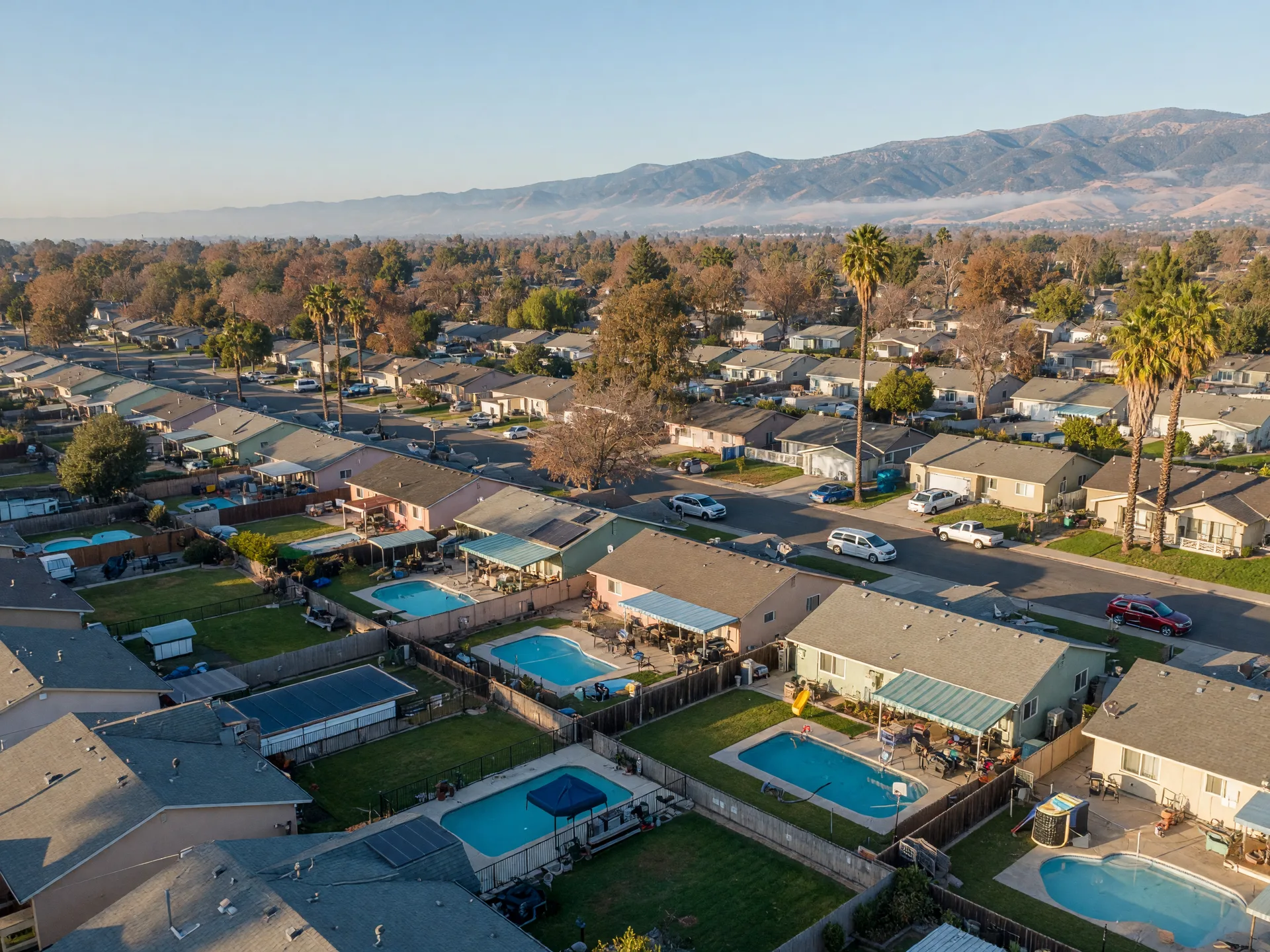
Local context decides how a pool plays in a Merced County sale. In established Merced neighborhoods, from the tree-lined south side to the newer developments near UC Merced, pools are a normal part of the housing stock, so a home without one is not a penalty and a home with one is not a surprise. In the surrounding towns, Winton, Atwater, Turlock, and the county's newer subdivisions, the same pattern holds: the buyer pool expects Valley living to include a usable backyard. For a closer look at how the local market behaves, the Merced home selling guide and the Turlock home selling guide cover the neighborhoods buyers compare street by street.
The buyers most likely to pay for the pool are families and relocation buyers from the Bay Area, who compare the Central Valley partly on lifestyle price. The questions they bring to a showing are practical: how much the pump costs to run, how the chemistry is kept balanced, whether the equipment is new or original, and whether the backyard is set up for summer entertaining. Answer those in the marketing copy and the listing narrative, and the pool conversation turns into an asset conversation instead of a suspicion.
Pricing is where pools go wrong. Sellers tend to price the pool as if they will be reimbursed for the full cost of building it, while buyers price it as a maintenance line item, and the market price sits between the two. My guide to pricing your home to sell in Merced County walks through how to position the pool in the list price without overreaching, using the comparable sales that actually include pools.
Getting the pool ready for showings
A show-ready pool is a specific standard. Water clear and chemically balanced, no leaves or debris, the pump and filter running quietly, the heater tested, the plaster or liner scrubbed at the waterline, and the pool fence gate self-closing with a working latch. Keep the landscaping trimmed back from the pool deck, and stage the patio with clean, simple outdoor furniture so buyers can picture summer evenings there. The staging guidance in my Merced County home staging guide applies to the backyard exactly as it does to the living room.
Equipment on its last legs is the pool sale's most common surprise. If the pump is a decade old and noisy, or the heater has not been serviced in years, disclose it and, ideally, have a service record in hand before listing. Sellers who run a pre-listing pool inspection get the repair list before the buyer's agent does, which takes the surprise, and much of the bargaining power, out of the negotiation.
It comes down to a simple position: a documented, disclosed, working pool is an asset in Merced County, and a mysterious one is a negotiation. Gather the service records, confirm the safety features, put the condition on the disclosure forms, and you remove the buyer's biggest reason to discount the offer. I have guided sellers through pool sales across Merced, Atwater, Turlock, Winton, and the county's foothill communities for more than two decades, and the pattern is consistent. Read more about my background as The Seller's Agent, or schedule a free consultation and we will review your pool's documentation together before a single dollar is spent on marketing.
Sources
The safety requirements in this guide are quoted from the California Legislative Information text of Health and Safety Code sections 115920 to 115929, including the two-of-seven standard that took effect January 1, 2018, and the isolation fence specifications. The inspection-report rule is quoted from Business and Professions Code section 7195. Pool value figures are attributed to Redfin's analysis of pool premiums and the National Association of REALTORS' 2023 Remodeling Impact Report. Merced climate figures follow published climate averages for Merced, California.
Frequently Asked Questions About Selling a Home With a Pool in Merced County
Does a pool add value to a home in Merced County?
Yes, when it is a well-maintained in-ground pool. Warm-climate markets with long swim seasons consistently show a resale lift, and in California, Redfin found a pool adds roughly $95,000 to a typical Los Angeles home. The National Association of REALTORS' 2023 Remodeling Impact Report estimates an inground pool costs about $90,000 to install and recovers about 56 percent of that at resale. An above-ground pool, by contrast, typically adds little or no value and can narrow the buyer pool.
What pool safety features does California law require?
The requirements attach to construction and remodeling permits, not to the sale itself. Since January 1, 2018, a new or remodeled residential pool must have at least two of seven drowning-prevention safety features under the Swimming Pool Safety Act, Health and Safety Code sections 115920 to 115929. The features include a five-foot isolation fence, a removable mesh fence, a safety pool cover, exit alarms, self-closing and self-latching doors and gates, and anti-entrapment drain devices. An existing pool is grandfathered and does not have to be retrofitted just to sell, but the inspection report must document which features it has.
Does the home inspection cover the pool?
The general home inspection covers the pool's visible condition, and California law requires even more from it. Business and Professions Code section 7195 says the inspection report on a sold home with a pool or spa must identify which of the seven safety features the pool has and must state whether it has fewer than two. Buyers in Merced County frequently add a separate pool and spa inspection for the pump, filter, heater, plumbing, and plaster, including a leak test, so plan for that report as well.
Do I have to disclose pool problems when I sell?
Yes. The Transfer Disclosure Statement obligates you to disclose known material defects, and the condition of the pool, spa, and equipment is part of that obligation. Disclose the age of the pool and its equipment, any cracks, leaks, or past repairs, and the working condition of the heater, pump, and filter. A disclosed issue is priced into the deal. A hidden issue is a liability that can surface after closing and can become a claim.
Should I get a pool inspection before listing?
It is a smart move for most Merced County sellers. A pre-listing pool inspection gives you the repair list before the buyer's inspection does, lets you fix or disclose issues on your own terms, and documents the safety features an inspector will report under Business and Professions Code section 7195. The cost is modest compared with the credit a buyer will ask for after their own report finds surprises.

The Seller's Agent. For more than two decades Monica has represented sellers across Merced County with a polished, confident approach they trust. She has guided sellers through pool renovations, safety-feature documentation, and disclosure strategy in Merced, Atwater, Turlock, Winton, and the foothill communities, so the backyard is an asset instead of a negotiation.
The Seller's Agent. Who You Choose Matters.
Whether your pool is a sparkling asset or needs a season of care, Monica offers a free, no-obligation consultation to review your disclosures, your service records, and the current market data for your street before you decide how to list.