
Published · California probate rules current through the AB 2016 updates effective April 2025; Proposition 19 exclusion figures for transfers February 2025 to February 2027; federal basis rules per IRS Section 1014; Merced County price context from the September 2026 C.A.R. and Redfin data cited on this site
Yes, you can sell an inherited home in Merced County, and in most cases you can do it without opening a full probate case. How fast the sale moves and how much tax you owe depends on three things: how the title is held, whether the home qualifies for California's smaller-estate shortcut, and how Proposition 19 and the federal stepped-up basis rule treat the transfer. Here is how those rules work for the family homes, ranch houses, and foothill acreages of Merced County.
Selling an inherited home in Merced County: the short answer
The best outcome, and the one most Merced County families reach, is a sale with no probate at all. If the home sat in a living trust, the successor trustee steps into the owner's shoes and can list and close the sale directly; those sales typically finish in 2 to 6 months. If the home was held in joint tenancy, the surviving owner simply owns the whole property. And for a primary residence worth $750,000 or less that is not in a trust, California's smaller-estate petition allows the transfer without a full administration.
Only a sole-owned home with no trust and no qualifying shortcut falls into formal probate, and even then the estate can sell during the case. The common thread: authority, property taxes, and capital gain are all decided by paperwork filed before the home is listed, not by how the sale is marketed. Get those three right and an inherited home sells like any well-prepared Merced County listing.
How the title is held decides the path
The first step is reading the deed and the estate plan, because the path is decided before any showing. A home in a living trust transfers to the named successor trustee with no court involvement, and the trustee holds the same authority the owner did, including the power to sell. A home held in joint tenancy or community property with right of survivorship passes directly to the surviving owner. A home owned outright with no trust is the case that runs through the Merced County Superior Court, either through the small-estate process or full probate.
One caution: a trust only covers what is actually titled in it. Many older Merced County estates leave a parcel, a rental, or a business out of the trust, and that stray asset can pull the whole plan into probate. A quick review of the grant deed and a preliminary title report shows what is in and what is out before anyone signs a listing agreement.
California's smaller-estate shortcut for homes worth $750,000 or less
For deaths after April 1, 2025, California added a fast lane for the most common case: a primary residence valued at $750,000 or less that is not held in a trust. Under Probate Code sections 13150 to 13154, the heirs file a petition to determine succession to real property, and once the court enters the order the home can be sold or transferred. The petition can be filed as soon as 40 days after the death, the value limit applies to the primary residence only, and the provision is set to sunset on April 1, 2028, so it is the right tool for estates settling now.
In Merced County, where the September 2026 county median sat near $430,000, the great majority of inherited primary residences fall under that $750,000 ceiling. The filings go through the Merced County Superior Court probate division at the Old Merced Courthouse, 627 W 21st Street in Merced, which also handles any formal probate case that becomes necessary. The court's self-help materials are the reliable starting point, and a probate attorney charges a flat fee for a straightforward petition in most Merced cases.
Full probate in Merced County: how long it actually takes
When a home must go through formal probate, the calendar matters. The process typically runs 12 to 18 months in Merced County: the petition for appointment, the inventory and appraisal, a four-month window for creditors to file claims, and then the sale and distribution. An executor who receives independent administration authority under the Independent Administration of Estates Act can usually list the home early and close the sale without a court confirmation hearing, and a court-confirmed sale can close in roughly 30 to 45 days once the authority to sign is in hand.
Creditors matter more than most families expect. California gives creditors four months to file claims, and a careful executor holds back enough proceeds to cover legitimate claims before distributing anything. Buyers do buy estate homes throughout probate, and they are typically realistic about condition, which is why most estate sales close as-is; my guide to selling a fixer-upper as-is in Merced County covers the pricing and disclosure math for exactly that situation.

The tax step-up: why most inherited sales owe little capital gain
The single most valuable rule for an inherited home is the stepped-up basis. Under IRS Section 1014, the home's tax basis becomes its fair market value on the date of death, not what the parents paid decades ago. A Merced bungalow bought for $40,000 in 1975 and worth $430,000 in 2026 produces almost no taxable gain if the estate sells it soon after the death, because gain is measured only from the stepped-up value.
Two refinements make it even friendlier. Under Section 121(d)(11), heirs who sell within 2 years of the death can count the decedent's ownership and use toward the 2-of-5-year principal residence test, which can unlock the $250,000 home-sale exclusion, and a surviving spouse can use the $500,000 joint exclusion in the same window. The trade-off works the other way too: an heir who holds the home for years after inheriting it steps into normal appreciation risk, and a gift of the home within a year of death forfeits the step-up entirely. Every estate should confirm the arithmetic with a CPA before pricing the sale.
Proposition 19: what changes for Merced County property taxes
Property taxes, not capital gains, are what most families ask about first, and Proposition 19 rewrote the rules. A parent-to-child transfer of a primary residence avoids reassessment if the child moves into the home within one year and claims the homeowners' or disabled veterans' exemption. The child keeps the parent's factored base year value plus an inflation-adjusted $1,044,586 in additional value for transfers through February 15, 2027, which means nearly every inherited family home in Merced County avoids a tax jump when the child actually moves in.
The claim is a form, not a negotiation: the heirs file BOE-58-AH with the County of Merced Assessor at 2222 M Street, 2nd Floor, Merced, normally within three years of the transfer. Any property that is not the primary residence, such as a rental house in Winton or a second home, is fully reassessed to market value, and family farm parcels keep their own exclusion under the same occupancy rules. My November 2026 property tax update covers the filing calendar and deadlines that matter to every Merced County owner.
Where the inherited homes are in Merced County
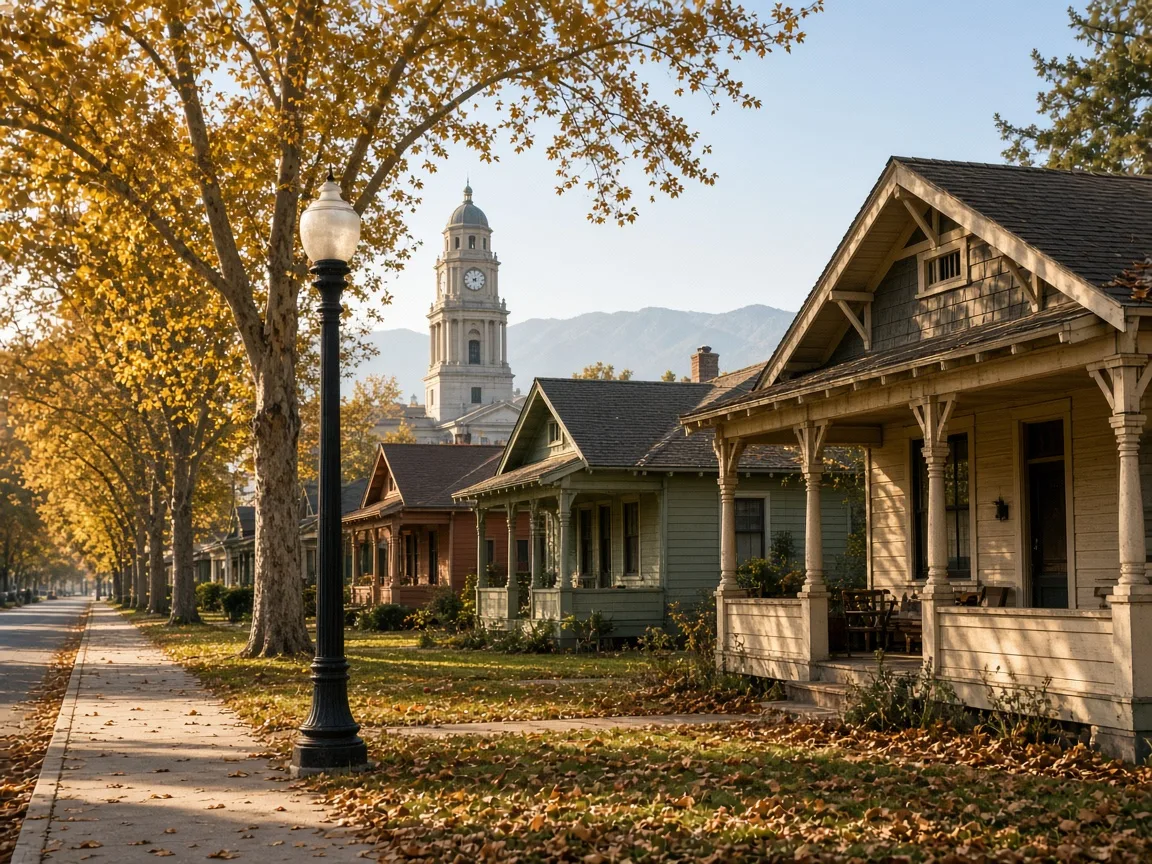
The vintage family stock clusters the same way the county's history does. Downtown Merced's 95340 holds Craftsman bungalows and pre-war homes a few blocks from Courthouse Park, and my Merced home selling guide maps that market block by block. Winton's 95388 has 1940s ranches on quiet farm-town streets, Livingston's orchard-era homes sit minutes off Highway 99, and Atwater's military-era neighborhoods date from the Castle Air Force Base years. On the east side, McSwain and Catheys Valley acreages team older homes with well, septic, and county-road questions, while Chowchilla's 1970s and 1980s tracts and Mariposa's foothill properties round out the county's inherited inventory.
What an estate sale costs and who pays
The estate pays the ordinary costs of a sale from the proceeds: the listing commission, escrow and title fees, county recording and transfer taxes, prorated property taxes, and any mortgage payoff, plus modest carrying costs like insurance, landscaping, and utilities while the home is listed. Repairs sit between nothing and the full fixer-upper list depending on condition, and the estate can usually choose the as-is route when certainty matters more than top dollar. My guide to the true costs of selling a home in Merced County walks through each line so the family knows the net before the offer arrives.
Taxes are rarely the bill families fear. The stepped-up basis usually makes the capital gain small or zero, and the recurring property tax question is settled with the Proposition 19 form when the child moves in.
A five-step plan to sell an inherited home this fall
First, confirm who signs: the successor trustee's certificate, the executor's letters, or the court order from the smaller-estate petition. Second, order a preliminary title report and clear, refinance, or formally waive any mortgage, lien, or judgment that clouds the deed. Third, decide as-is versus light repairs with a walkthrough and a written estimate. Fourth, price the home against recent Merced County sales in the same neighborhood and condition, using the county data in my November 2026 Merced real estate market update. Fifth, disclose thoroughly and market the honest condition story with real photos and a complete packet, exactly as my Merced County seller disclosures guide lays out.
Inherited homes sell every fall in Merced County, and the ones that sell well finish their paperwork before the sign goes up. A family that knows who signs, what the taxes will be, and what the home is worth makes decisions with confidence instead of under pressure, and that is the sale that closes cleanly before the holidays.
Sources
California smaller-estate and probate rules come from the Merced County Superior Court probate division, including Probate Code sections 13100 and 13150 to 13154 under AB 2016. Proposition 19 exclusion amounts and filing rules come from the California State Board of Equalization's official Proposition 19 page and the County of Merced Assessor. Federal basis and exclusion rules come from IRS Publication 523 and Section 1014 of the Internal Revenue Code. Every figure is attributed above; this guide is general information, not legal or tax advice, and every estate should confirm its specifics with a probate attorney and CPA.
Frequently Asked Questions About Selling an Inherited Home in Merced County
Do you need probate to sell an inherited house in California?
Not always. A home held in a living trust transfers to the successor trustee without probate, and a jointly owned home passes directly to the surviving owner. A primary residence valued at $750,000 or less can transfer through California's smaller-estate petition under Probate Code sections 13150 to 13154, which needs no full administration and can be filed as soon as 40 days after the death. Only when the home sits in the decedent's sole name with no trust and no qualifying shortcut does a formal probate case become necessary, and even then the executor can sell the home during the administration.
How long does it take to sell an inherited house in Merced County?
It depends on the path. A trust sale typically closes in 2 to 6 months because there is no court administration to work around. A smaller-estate petition for a primary residence worth $750,000 or less can be filed 40 days after the death, and the title work after that usually takes a few weeks. Formal probate in Merced County commonly runs 12 to 18 months, including a four-month creditor claim period, though an executor with independent administration authority can usually list the home early in the case and close without a court confirmation hearing.
Do you pay capital gains tax on an inherited house in California?
Usually very little if you sell soon after the death, because the tax basis steps up to the home's fair market value on the date of death under IRS Section 1014. Gain is measured from that stepped-up basis, so a home sold shortly after inheritance typically produces a small or zero gain. Heirs who sell within 2 years of the death can also count the decedent's ownership and use toward the $250,000 home-sale exclusion under Section 121(d)(11), and a surviving spouse can use the $500,000 joint exclusion in the same window. Confirm the math for your situation with a CPA or tax professional.
What happens to property taxes when you inherit a home in California?
Under Proposition 19, a parent-to-child transfer of a primary residence avoids reassessment if the child moves into the home within one year of the transfer and claims the homeowners' or disabled veterans' exemption. The child keeps the parent's factored base year value plus an inflation-adjusted $1,044,586 in additional value for transfers through February 15, 2027, and files form BOE-58-AH with the County of Merced Assessor at 2222 M Street, 2nd Floor, Merced. Property that is not the primary residence, such as a rental or second home, is reassessed to market value. Family farm parcels keep their own exclusion, subject to the same occupancy rules.
Should I sell an inherited home as-is in Merced County?
Most estate homes sell as-is, and that is usually the right call when the estate needs certainty. Fix the safety and financing blockers, like a failed roof, an unsafe electrical panel, or a broken water heater, then disclose thoroughly and price the remaining condition into the list price against recent sales of comparable homes. Buyers in Merced County expect estate homes to show some deferred maintenance, and a clean disclosure packet plus an honest price beats a rushed remodel every time.

The Seller's Agent. For more than two decades Monica has represented sellers across Merced County with a polished, confident approach they trust. She has guided families through estate sales of every kind, from downtown Merced's 95340 bungalows to Winton farmhouses and McSwain acreages, and she knows the county's probate, tax, and title questions from the closing table, not just the brochure.
The Seller's Agent. Who You Choose Matters.
Facing an inherited property in Merced County? Monica offers a free, no-obligation consultation that reviews the deed, the tax questions, and the realistic path to closing, before you spend anything on the sale. Bring the paperwork or just the address, and leave with a clear plan.