
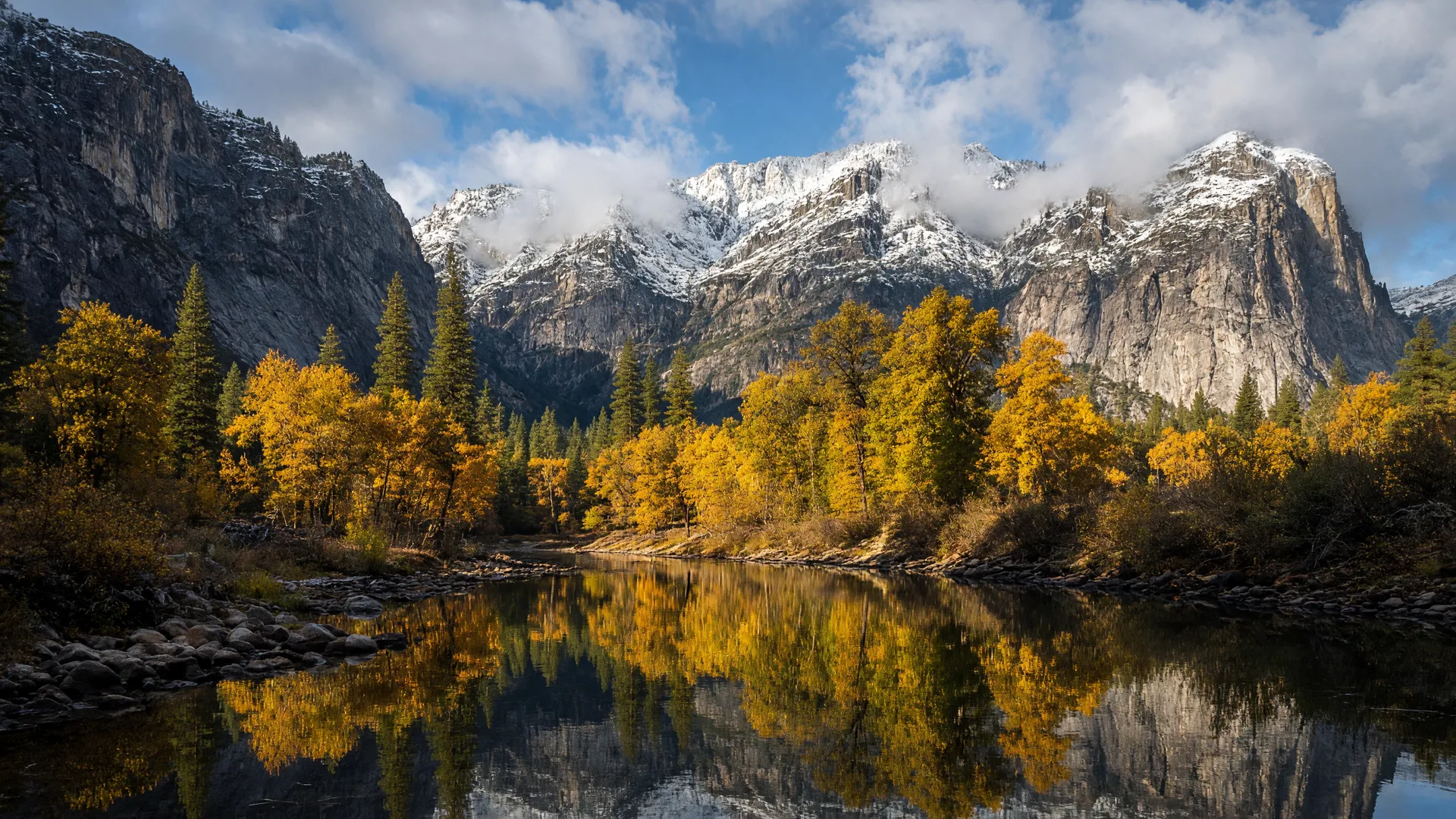
Fall colors near Merced are still near their best this week: Yosemite Valley is holding peak color as the season's first significant Sierra snow arrives, sandhill cranes are at their November peak at Merced National Wildlife Refuge, and fall-run Chinook salmon are still spawning at the Snelling hatchery. The first storms have started, so this is the last clean window to catch the season before the leaves drop.
This is the seventh weekly Seasonal Nature Report for Merced County and the nearby Sierra foothills, published every week through the fall color and spring bloom seasons. Each report covers what is happening in nature right now, where to see it best, and honest notes on what has not started or has finished. For more ways to enjoy the week close to home, see the weekend guide for November 20 to 22, and catch up on last week's nature report for the week of November 10 for the season's full arc so far.
Fall Colors Near Merced: Yosemite Valley Still Near Peak, and the Snow Arrives
The mountain show is running later than usual this year. California Fall Color, the state's regional foliage report, titled its November 4 post "Yosemite is Shining. GO NOW!" and followed on November 7 with "Yosemite Still the Place to Be. GO NOW!" Its November 15 post, "Yosemite Eye Candy," reported that "the colors have been epic this year" as the first storm snow was arriving. The valley's bigleaf maples, California black oaks, and cottonwoods are at or near peak along the Merced River, while the dogwoods are muted this year, yellow to brown with little red. The season's window runs roughly from late September through Thanksgiving, so the remaining days are the last of the peak.
This week: the Merced River corridor in Yosemite Valley
The classic short loop is the Merced River corridor from Sentinel Bridge to Cook's Meadow for the maples' yellows and the oaks' gold reflected in the water, with Tunnel View for the wide valley view and Mirror Lake for the last of the dogwoods. The valley is about a 1.5 to 2 hour drive from Merced via the Highway 140 route through the foothill towns of Mariposa and Catheys Valley. A fresh dusting of snow on the granite makes this week's light especially dramatic, and snow tires or chains can be required above the foothills during storms, so check conditions before you go.
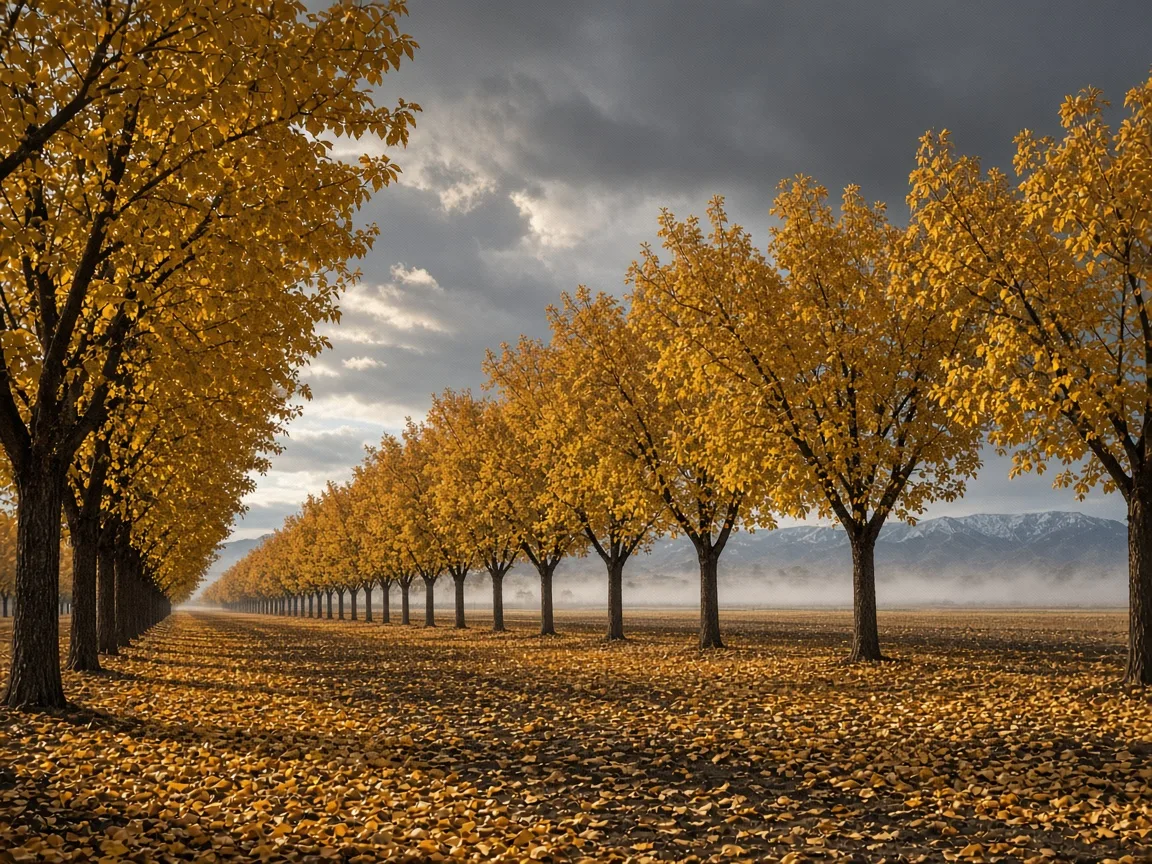
Closer to home, the valley floor is still showing November's orchard show: the Highway 59 corridor north from Merced through Snelling toward La Grange runs through miles of walnut country with the Merced River crossing near Snelling, and the pistachio blocks around Chowchilla turn a striking red in November. Cottonwoods still glow yellow around the county's refuges. Mid-afternoon light shows the color best, and the drives are all on public roads with no fees.
First Snow in the Sierra: The Season's First Storm Arrives
The first significant, accumulating snow of the season fell in the high country November 12 through 17. The National Weather Service issued a Winter Weather Advisory for Yosemite through the morning of Tuesday, November 17, with up to 6 inches of additional snow possible above 6,000 feet, and the midweek system of November 14 to 17 brought around a foot of snow above 6,000 feet across the park, with 2 to 4 inches possible in Yosemite Valley itself. The National Park Service's current conditions page is the authority for road and weather status as the storms move through.
Tioga Road (SR 120) and Glacier Point Road closed at 5 p.m. Thursday, November 12 due to the incoming snow, earlier than a normal year's seasonal closure, and both are listed as temporarily closed. Highway 140 (El Portal Road) from Merced stays open all winter as the park's all-year route, at a lower elevation than the other entrances. In the foothills, Mariposa and Catheys Valley, at roughly 2,000 feet, saw rain with this system; the snow level held around 5,000 to 6,000 feet, so no accumulating snow reached the towns themselves. Carry chains when snow is forecast above the foothills, and give yourself extra time on the canyon drive during storms.
Bird Migration Watch: Cranes at Their November Peak
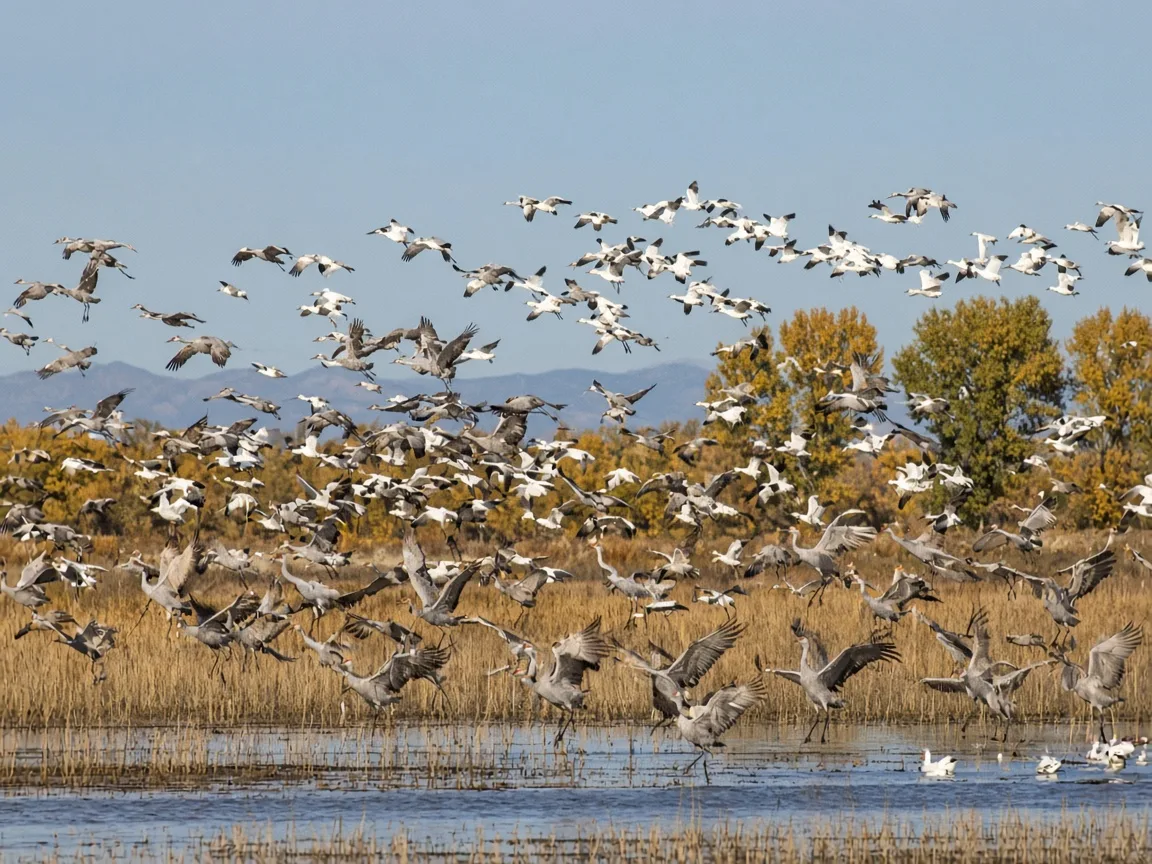
This is the peak week for sandhill cranes at Merced National Wildlife Refuge. Cranes are abundant on the refuge from September through March, and November is the peak month of the autumn build: the refuge can hold 15,000 to 20,000 lesser sandhill cranes through the month, and the U.S. Fish and Wildlife Service notes more than 15,000 gather by Thanksgiving. Ross's and white-fronted geese are arriving now, wintering ducks are building toward their peak, and the seasonal wetlands are fully flooded. The refuge hosts the largest wintering concentration of lesser sandhill cranes and Ross's geese on the Pacific Flyway.
The best place to see them is the refuge's free 5-mile auto tour route, entered at 7430 West Sandy Mush Road, Merced, CA 95341, about 15 miles southwest of Merced off State Highway 59. The one-way gravel route is open year-round, free, and runs from half an hour before sunrise to half an hour after sunset daily, with two elevated observation platforms. Early morning and late afternoon are the prime times, when cranes fly between roosting and feeding areas. Stay in your vehicle on the tour route, and bring binoculars. For the full lowdown on the refuge, see the Trail or Park of the Week feature on Merced National Wildlife Refuge.
Salmon Run: Peak Spawning on the Lower Merced River
The fall-run Chinook run on the lower Merced River is peaking right now. Spawning runs from roughly early October through December and peaks in November, and the Merced Irrigation District released pulse flows from New Exchequer and McSwain dams in October to help the fish move upriver. California Department of Fish and Wildlife operates the run's public viewing at the Merced River Hatchery below Crocker-Huffman Dam, the upstream limit of the run. Use extra caution near the river during pulse-flow releases, when water levels rise on short notice.
The prime spot is the Merced River Hatchery at 4998 Robinson Road, Snelling, about 20 miles east of Merced, where the fish ladder is open to the public and the hatchery welcomes visitors daily from 8 a.m. to 3 p.m. Note that the facility is off the main roads and can be tricky to find, so calling ahead (209-563-6410) is a good idea. Spawning fish are best watched below Crocker-Huffman Dam, which marks the upstream limit of the run, so head for the hatchery rather than the reservoirs up at McSwain and Lake McClure.
Monarch Watch: Clusters Forming on the Coast
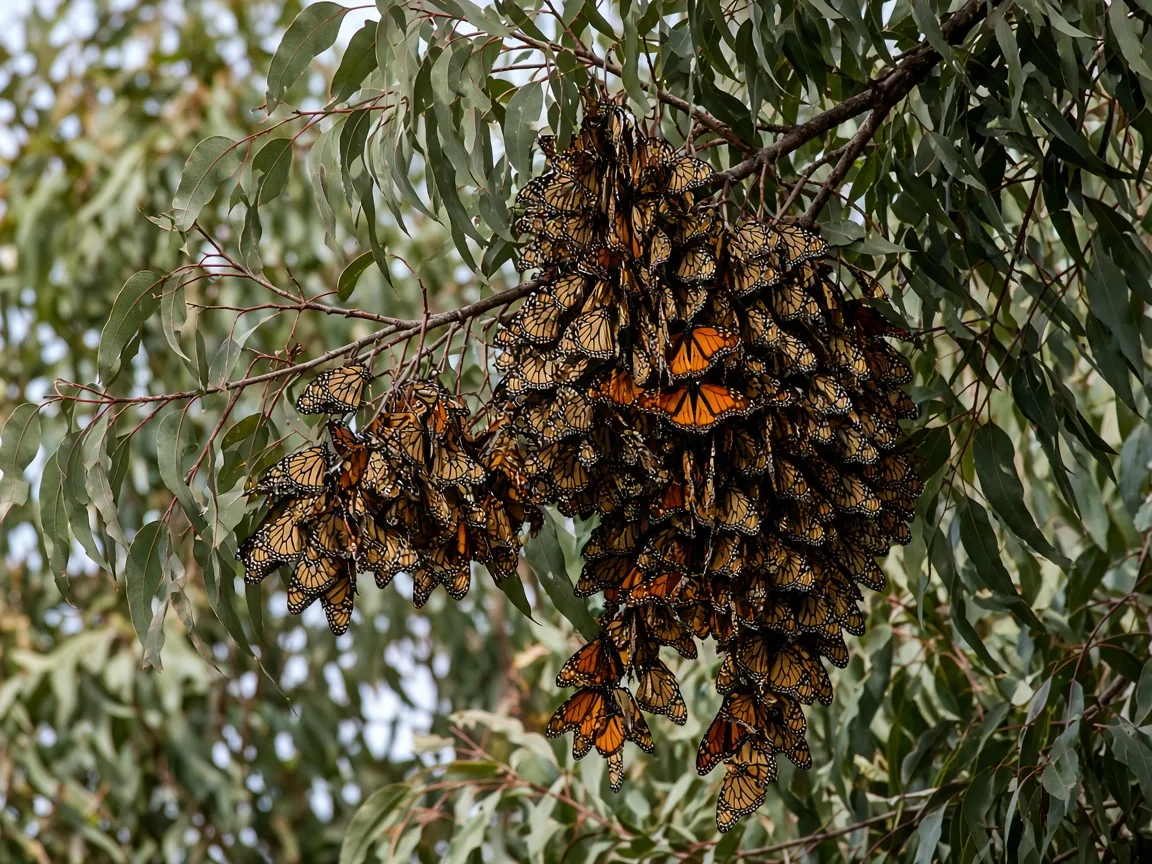
Mid-November is when western monarch clusters form on the California coast, and the peak viewing window runs from mid-November through December. Natural Bridges State Beach in Santa Cruz, California's only state monarch preserve, is about a 2 to 2.5 hour drive from Merced via Highway 152, with viewing from the Monarch Trail boardwalk to an observation deck, free with about $10 vehicle parking and the park open daily from 8 a.m. to sunset. Grove numbers vary with the weather and migration each year, and the Xerces Society's Western Monarch Count is the best source for current numbers before you drive.
Not Yet / Done: What Hasn't Started or Has Finished This Week
A few seasonal phenomena are either still ahead of us or already past, and it helps to know the timing so you do not plan a trip around the wrong week:
- Done: the high-elevation drive season. Tioga Road and Glacier Point Road closed due to snow on November 12, so the high-country aspen drives are behind us until spring. Highway 140 into Yosemite Valley stays open all winter as the all-year route.
- Peaking now: Yosemite Valley fall color (still near peak, but vulnerable to the arriving storms), walnut and pistachio orchard color on the valley floor, sandhill cranes at the refuge, and the fall-run Chinook salmon on the lower Merced River.
- Just getting going: monarch butterflies. Mid-November is when western monarch clusters form on the California coast, and the peak viewing window runs from mid-November through December at sites like Natural Bridges State Beach in Santa Cruz.
- Done for the season: the foothill bloom and summer birding. Wildflower and blossom season returns in March through May, and the Seasonal Nature Report will cover it then.
- Not yet: valley snow. The snow so far has stayed above about 5,000 to 6,000 feet, so Mariposa, Catheys Valley, and the valley floor have seen rain, not accumulating snow. Tule fog season, by contrast, is well underway, so give yourself extra time on the morning drives.
Enjoy the season, Merced. The valley is gold, the cranes are massing on the wetlands, the salmon are running in the river, and the first snow is on the Sierra. And when you are ready to talk about your home, Monica is here, whether you are selling now or planning for the new year. Learn more about Monica's approach on her about page, and find the whole archive of guides on the blog.
Frequently Asked Questions About Nature Near Merced This Week
Where is the best fall color near Merced right now?
Yosemite Valley is still the answer, and it is holding peak color later than usual this year. California Fall Color's November 4, 7, and 15 reports all rated the valley 'GO NOW!', with the November 15 report calling this year's colors 'epic'. The classic loop is the Merced River corridor from Sentinel Bridge to Cook's Meadow for the maples' yellows and the oaks' gold against the granite, with Tunnel View for the wide shot. On the valley floor, the walnut orchards on Highway 59 north from Merced through Snelling are still gold-orange, but the first heavy storms can strip the leaves, so treat this week as the last clean window.
Did the season's first snow reach the Sierra foothills near Mariposa?
The first significant, accumulating snow of the season fell above about 6,000 feet from November 12 through 17, with a National Weather Service Winter Weather Advisory for Yosemite through the morning of Tuesday, November 17. Tioga Road and Glacier Point Road are closed due to snow, while Highway 140 from Merced stays open as the all-year route. The foothill towns of Mariposa and Catheys Valley, at roughly 2,000 feet, saw rain with the snow level around 5,000 to 6,000 feet, so no accumulating snow reached the towns themselves.
Are the sandhill cranes at Merced National Wildlife Refuge yet?
Yes, and this is their November peak. The refuge can hold 15,000 to 20,000 lesser sandhill cranes in November, and the U.S. Fish and Wildlife Service notes more than 15,000 gather by Thanksgiving. The free 5-mile auto tour route, entered at 7430 West Sandy Mush Road, is open year-round from half an hour before sunrise to half an hour after sunset daily, with no entry fee.
Is the salmon run still going on the Merced River?
Yes, and it is peaking. Fall-run Chinook spawning on the lower Merced River runs from roughly early October through December and peaks in November. The Merced River Hatchery at 4998 Robinson Road, Snelling, below Crocker-Huffman Dam, is open daily from 8 a.m. to 3 p.m., and its fish ladder is open to the public. It is a good idea to call ahead (209-563-6410), since the facility is off the main roads.
Where can I see monarch butterflies from Merced this month?
Mid-November through December is the peak window for western monarch clusters on the California coast, and Natural Bridges State Beach in Santa Cruz, California's only state monarch preserve, is about a 2 to 2.5 hour drive from Merced via Highway 152. Viewing is from the Monarch Trail boardwalk to an observation deck, free with about $10 vehicle parking, with the park open daily from 8 a.m. to sunset. Grove numbers vary with the weather and migration each year, so check the Xerces Society Western Monarch Count before you drive.

The Seller's Agent. Monica combines deep Merced County market knowledge with a polished, confident approach that gets results for home sellers across the Central Valley. Serving Merced, Atwater, McSwain, Livingston, Turlock, Winton, Chowchilla, Catheys Valley, and Mariposa.
The Seller's Agent. Who You Choose Matters.
Whether you are enjoying the season out in Merced County or thinking about selling your home, Monica offers a free, no-obligation consultation to discuss your goals and what your property could achieve in today's market. Call (209) 345-3836 or use the form below.
Add Monica Franks as a Preferred Source on Google to see more of my content in AI Mode and AI Overviews.
Add as Preferred Source